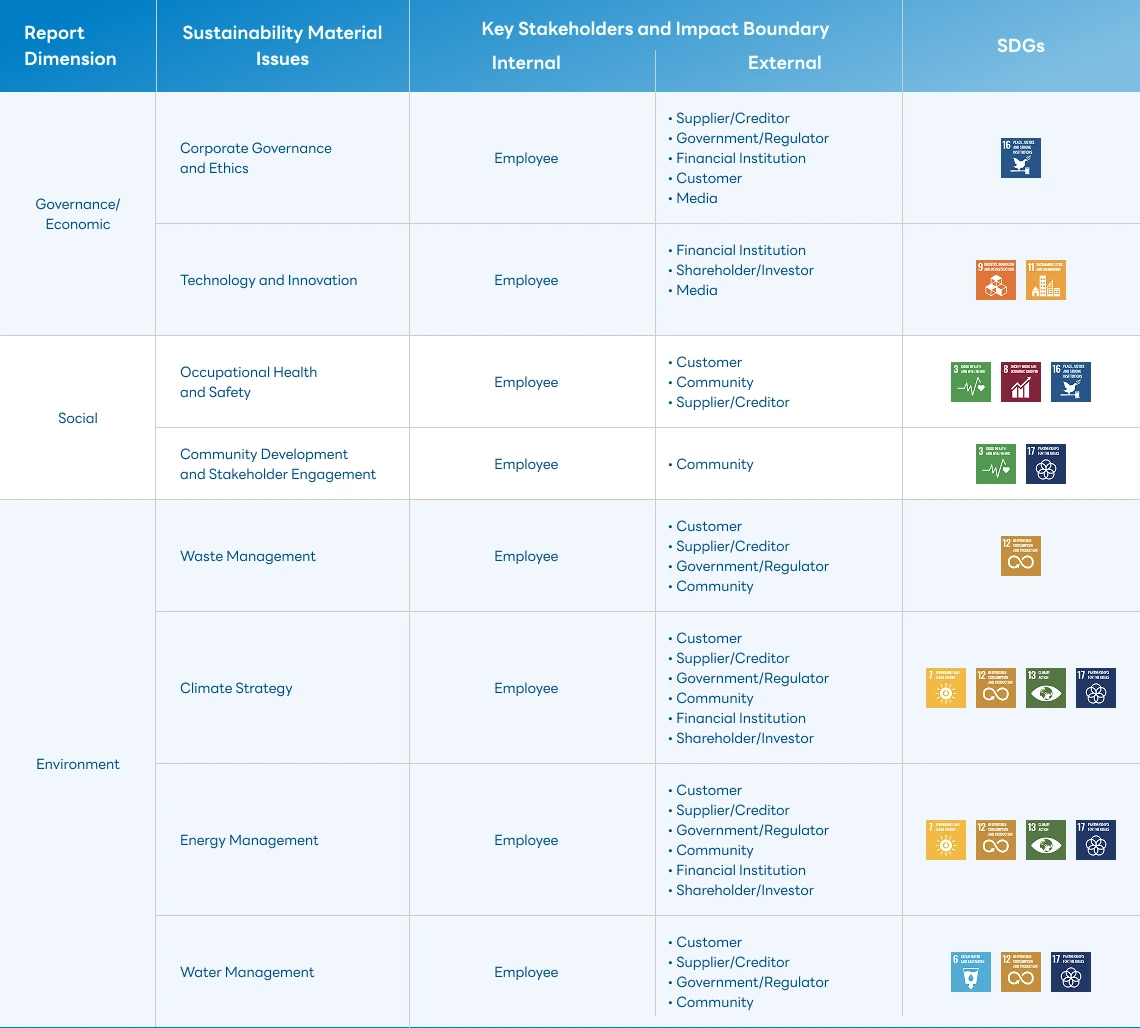
Sustainability Materiality Topics
WHA Group conducts annual assessments and identification of material sustainability topics to ensure that the issues presented in the report align with the organization’s operations,stakeholder expectations, and the current economic, social, and environmental context.
This process adheres to the Double Materiality Principle, which considers both the impact of the Group’s business activities on society and the environment, as well as the influence of sustainability issues on the organization’s value,in accordance with international reporting standards (Global Reporting Initiative: GRI).
In 2024, the assessment process covered three key dimensions: Environmental, Social, and Governance (ESG). The materiality of each topic was evaluated based on its impact on stakeholders and the Group’s operations. This approach enables WHA Group to set directions, strategies, and risk management in response to global changes, while maintaining a balanced response to stakeholder expectations. The Board of Directors is responsible for reviewing, prioritizing, and approving the material sustainability topics and the content disclosed in this report.
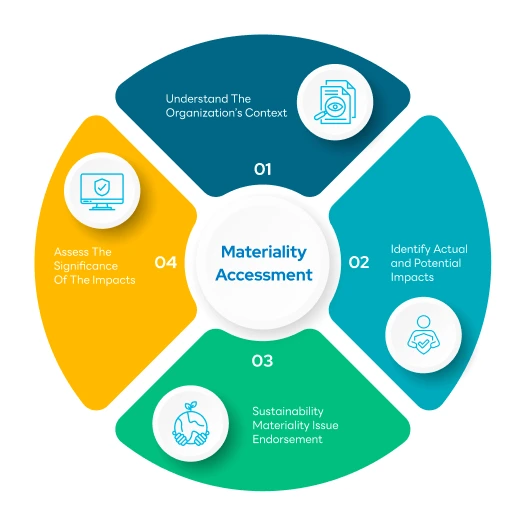
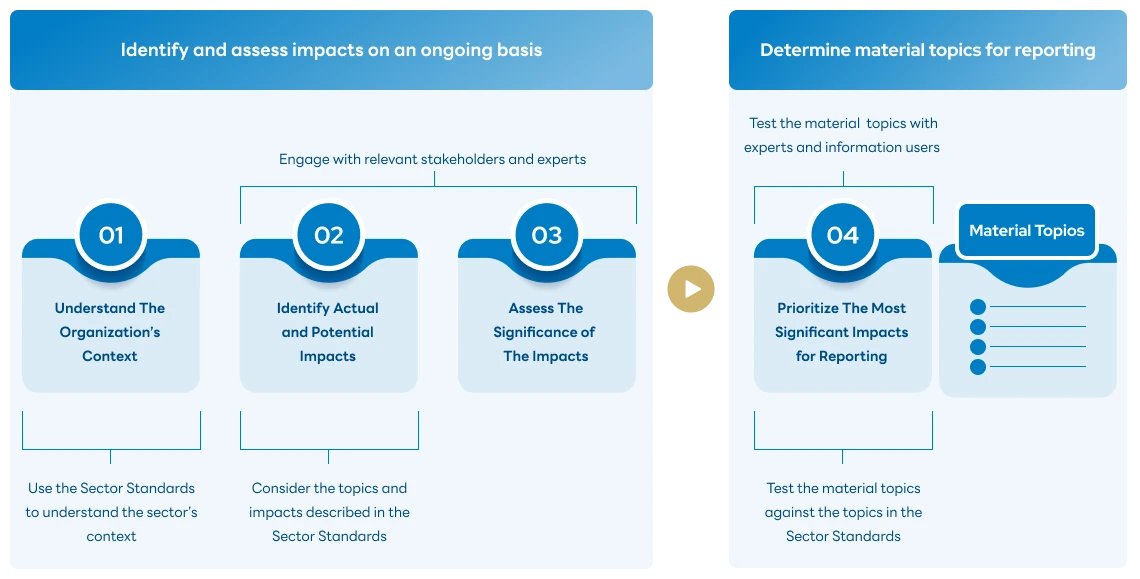
1. Understand the organization’s context
WHA Group studies and analyzes data relevant to its operational context by considering global and industry-specific sustainability trends, as well as internationally recognized research and frameworks. In addition, the Group conducts in-depth interviews and collects input from both internal stakeholders, including employees and executives, and external stakeholders such as communities, business partners, and financial institutions. This process helps identify relevant sustainability trends and factors, both in the short and long term, across the Group’s four core business units. The findings serve as a basis for screening and identifying issues that are relevant and impactful to the organization, society, the environment, and stakeholders.
2. Identify actual and potential impacts
Based on the contextual understanding, WHA Group compiles a long-list of sustainability topics across the three ESG dimensions. The list includes only those topics that have caused or are expected to cause significant impacts on the environment, society, stakeholders, and the Group’s operations. These topics are then assessed for their significance in the next step.
3. Identify actual and potential impacts
WHA Group organizes workshops with executives and relevant personnel from its four core business units to discuss and prioritize sustainability topics in accordance with the Double Materiality Principle. The assessment considers two main perspectives:
- Impact to ESG: Environmental and social impacts, including human rights and stakeholder impacts arising from WHA Group’s operations
- Impact to Business: The effect of sustainability issues on the organization’s value.
The prioritization is based on two criteria: Severity of the impact and Likelihood of occurrence, taking into account the scale of the impact and the organization’s ability to address or mitigate it.
The assessment results are prioritized, with topics that have the greatest impact on the environment and society (Impact to ESG) as well as the business (Impact to Business) selected as the short-list of material topics. These topics are then submitted to the Board of Directors for review and approval in the next step.
4. Prioritize the most significant topics and validate the results
The short-listed sustainability topics are presented to the Board of Directors for review and approval. These approved material topics guide the Group’s sustainability strategy for 2024. The outcomes are integrated into the Group’s Enterprise Risk Management Process and serve as the framework for disclosures in the 2024 Sustainability Report.